Department of Statistics · Texas A&M University

Scott A. BruceAssociate Professor, Department of Statistics, Texas A&M University

I develop statistical methods for complex time series, functional data, and longitudinal signals, with an emphasis on nonstationary processes, spectral analysis, Bayesian learning, and computationally efficient tools for modern biomedical and scientific applications.

About

Scott A. Bruce is an Associate Professor of Statistics at Texas A&M University. His work combines methodological and collaborative statistics, with research centered on nonstationary and multivariate time series, adaptive frequency band analysis, Bayesian spectral modeling, and scalable statistical learning for complex data.

Much of his research is motivated by transdisciplinary problems in sleep and circadian science, cardiology, psychiatry, neuroscience, biomechanics, and digital health. Across these settings, he develops practical, computationally efficient methods for extracting interpretable structure from high-dimensional signals, wearable measurements, and longitudinal observations.

His recent work includes frequency band analysis for multiple stationary and nonstationary multivariate time series, spectral methods for categorical and functional time series, Bayesian tree-based models for covariate-dependent spectra, and distributed learning methods for large heterogeneous data.

Research areas

Current themes reflect the methodological and applied breadth of the research portfolio.

Nonstationary time series Functional time series Spectral analysis Frequency band analysis Bayesian spectral modeling Categorical time series Computational data science Distributed learning Longitudinal data analysis Biomedical signal analysis Sleep and circadian science Cardiovascular biomarkers Psychiatry and neuroscience Biomechanics

Research profile

My research develops statistical methodology for the analysis of temporally structured data arising in modern observational and experimental studies. I am especially interested in methods that are interpretable, adaptive, and computationally feasible in real-world scientific collaborations.

Methodological focus

  • Frequency-domain methods for stationary, nonstationary, multivariate, and functional time series.
  • Bayesian approaches for adaptive spectral estimation and covariate-dependent spectra.
  • Data-driven frequency band construction for interpretable dimension reduction.
  • Statistical learning tools for high-dimensional and heterogeneous data.

Application domains

  • Sleep medicine, circadian rhythms, and actigraphy.
  • Cardiology, proteomics, and biomarker-based clinical research.
  • Psychiatry, neuroscience, and behavioral health.
  • Biomechanics, gait analysis, and sports analytics.

Current projects

Selected software and methodological projects that reflect ongoing work in statistical computing and frequency-domain analysis.

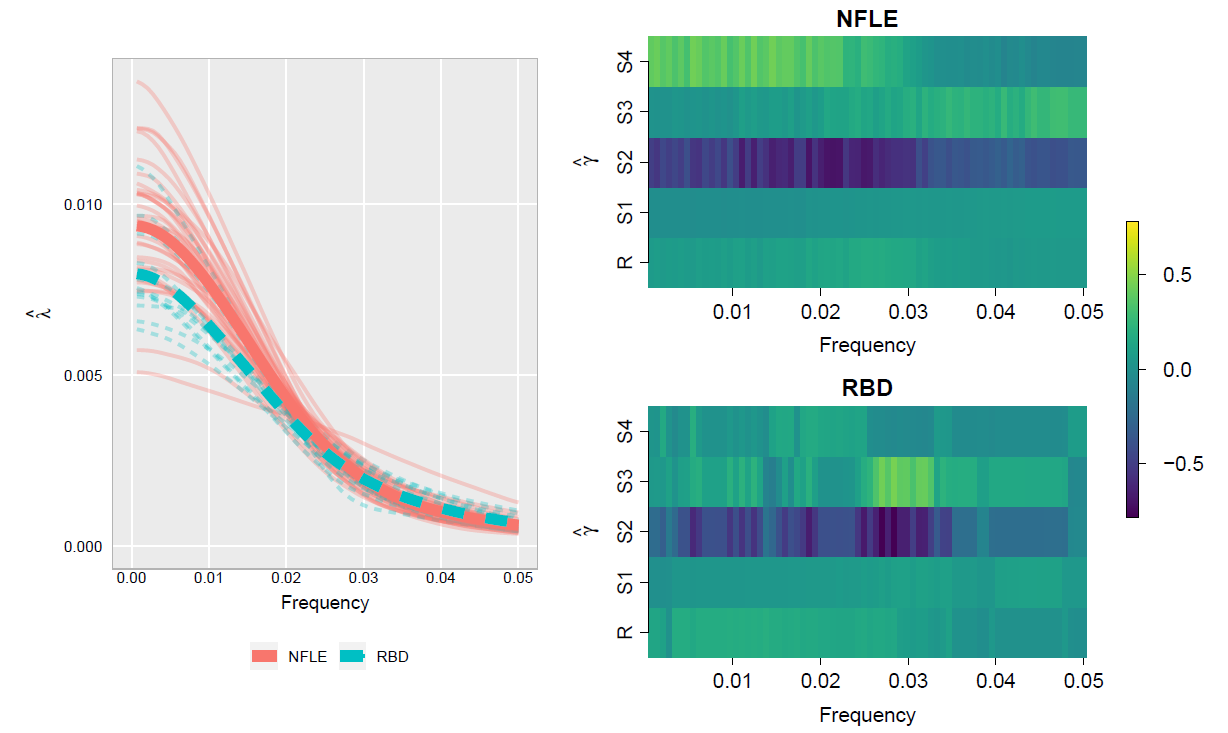
Figure from frequency band analysis article showing data-driven frequency band structure

mEBA: Frequency Band Analysis of Multiple Time Series

R code for multivariate empirical band analysis, including simulated examples and electroencephalography applications that accompany the frequency band analysis work for multiple time series.

R Spectral analysis Multiple time series Frequency band estimation
View repository
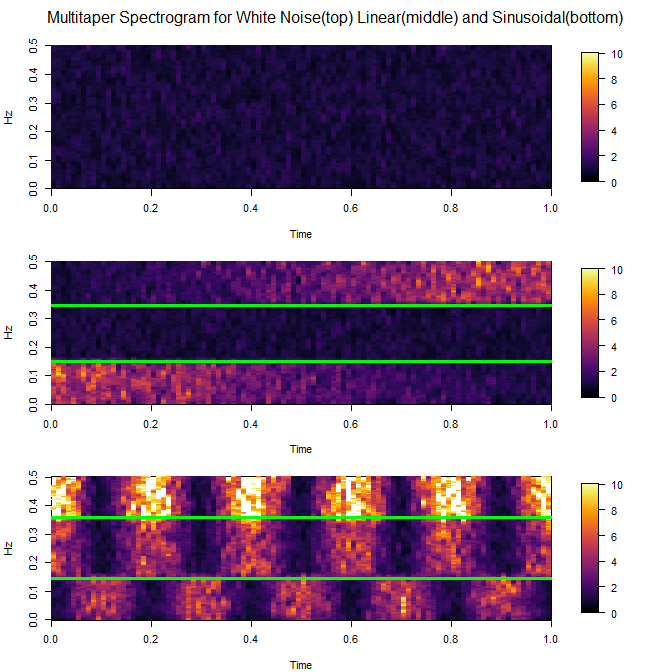
Project image for adaptive frequency band analysis

Adaptive Frequency Band Analysis for Functional Time Series

Software and methods for dimension reduction and adaptive frequency band learning in functional time series, motivated by complex biomedical signals and other high-dimensional temporal data.

R Functional time series Frequency-domain dimension reduction Biomedical data
View repository
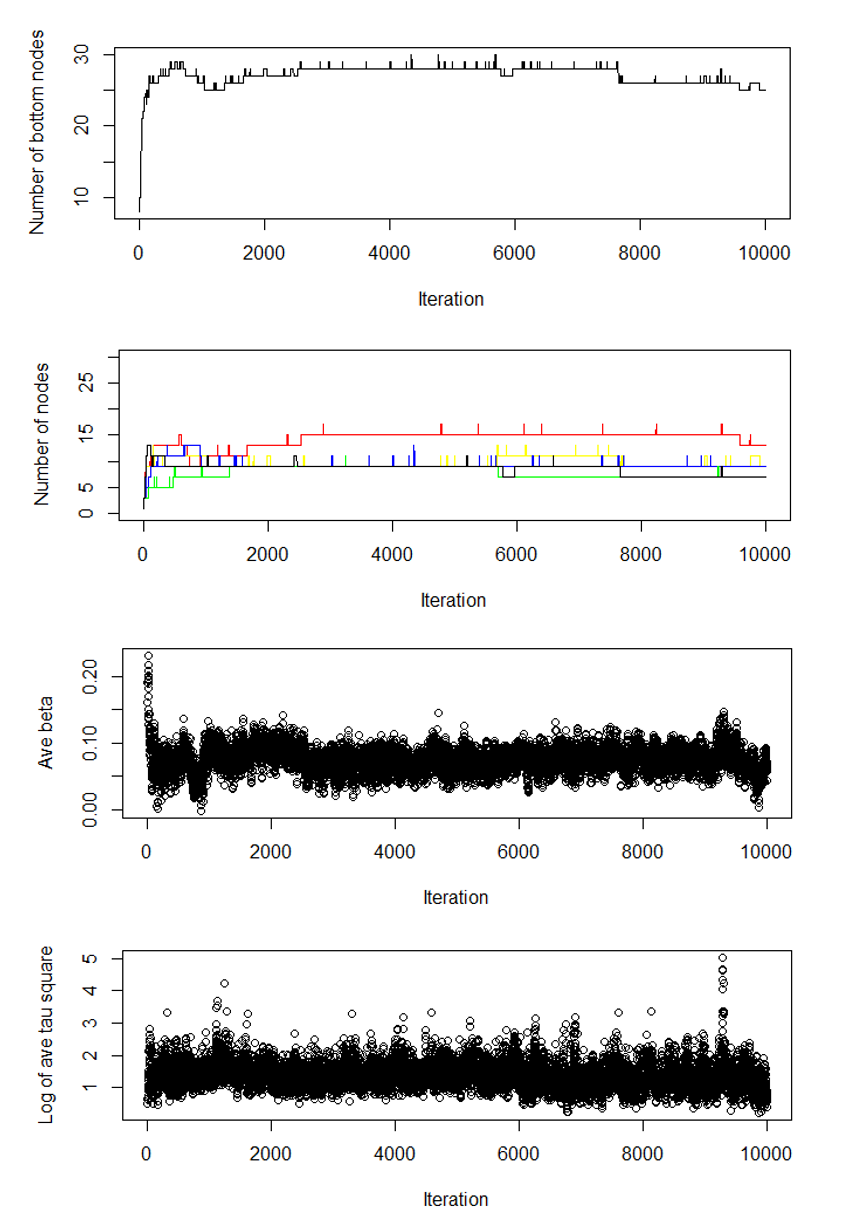
Categorical time series project image

Categorical Time Series Classification

R code for classification and clustering of categorical time series using the spectral envelope and optimal scalings, connecting interpretable frequency-domain summaries with modern machine learning tasks.

R Categorical time series Classification Machine learning
View repository
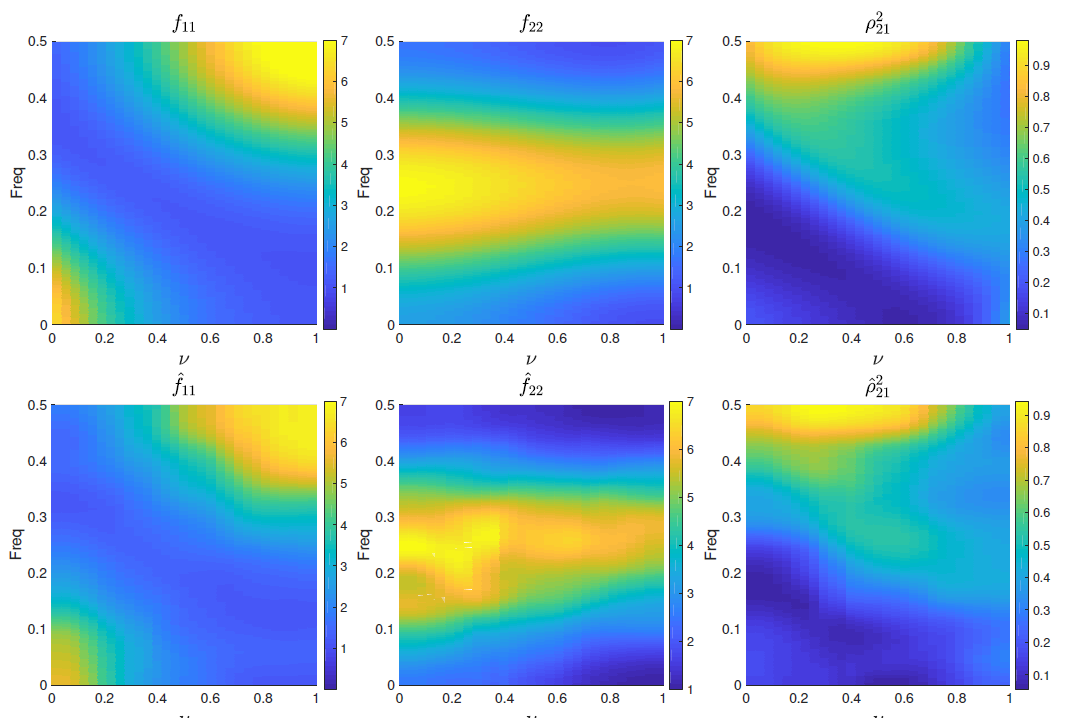
Bayesian additive regression trees spectral analysis project image

Bayesian Additive Regression Trees for Spectral Analysis

Methods and code for covariate-dependent spectral analysis of multiple time series using flexible Bayesian tree ensembles, with applications to complex biomedical studies.

R Bayesian analysis BART Time series
View repository

Publications

All publications are shown below in CV order. Use the search box to filter by author, title, journal, year, or keyword.

Methodological

Connor Brubaker, Jack Manning, Jennifer M. Yentes, and Scott A. Bruce. (2026). “Frequency Band Analysis of Multiple Stationary Time Series.” Statistics in Medicine. 45(3–5): e70412. DOI
Raanju Sundararajan and Scott A. Bruce. (2025). “Frequency Band Analysis of Nonstationary Multivariate Time Series.” Biometrics. 81(3): ujaf083. DOI
Zeda Li, Yu Yue, and Scott A. Bruce. (2024). “ANOPOW for Replicated Nonstationary Time Series in Experiments.” Annals of Applied Statistics. 18(1): 328–349. DOI
Scott A. Bruce. (2023). “Clustering of Categorical Time Series Using the Spectral Envelope and Optimal Scalings.” Statistics and Its Interface. 16(2): 319–335. DOI
Dixon Vimalajeewa, Scott A. Bruce, and Brani Vidakovic. (2023). “Early Detection of Ovarian Cancer by Wavelet Analysis of Protein Mass Spectra.” Statistics in Medicine. 42(13): 2257–2273. DOI
Yakun Wang, Zeda Li, and Scott A. Bruce. (2022). “Adaptive Bayesian Sum of Trees Model for Covariate Dependent Spectral Analysis of Multiple Time Series.” Biometrics. 79: 1826–1839. DOI
Dixon Vimalajeewa, Ethan McDonald, Scott A. Bruce, and Brani Vidakovic. (2022). “Wavelet-based Approach for Diagnosing Attention Deficit Hyperactivity Disorder.” Scientific Reports. 12: 21928. DOI
Zeda Li, Scott A. Bruce, and Tian Cai. (2022). “Classification of Categorical Time Series Using the Spectral Envelope and Optimal Scalings.” Journal of Machine Learning Research. 23(299): 1–31. Article
Zeda Li, Scott A. Bruce, Clinton Wutzke, and Yang Long. (2021). “Conditional Adaptive Bayesian Spectral Analysis for Multivariate Time Series.” Statistics in Medicine. 40: 1989–2005. DOI
Scott A. Bruce, Cheng Yong Tang, Martica Hall, and Robert T. Krafty. (2020). “Empirical Frequency Band Analysis of Nonstationary Time Series.” Journal of the American Statistical Association. 115: 1933–1945. DOI
Robert T. Krafty, Haoyi Fu, Jessica Graves, Scott A. Bruce, Martica Hall, and Stephen Smagula. (2019). “Measuring Variability in Rest-Activity Rhythms from Actigraphy with Application to Characterizing Symptoms of Depression.” Statistics in Biosciences. 11: 314–333. DOI
Scott A. Bruce, Zeda Li, Hsiang-Chieh Yang, and Subhadeep Mukhopadhyay. (2019). “Nonparametric Distributed Learning Architecture for ‘Big Data’: Algorithm and Applications.” IEEE Transactions on Big Data. 5(2): 166–179. DOI
Zeda Li and Scott A. Bruce. (2018). Discussion to the paper: “The Statistical Analysis of Acoustic Phonetic Data: Exploring Differences Between Spoken Romance Languages.” Journal of the Royal Statistical Society, Series C. 67: 1103–1145. DOI
Scott A. Bruce, Martica Hall, Daniel Buysse, and Robert T. Krafty. (2018). “Conditional Adaptive Bayesian Spectral Analysis of Nonstationary Biomedical Time Series.” Biometrics. 74: 260–269. DOI
Scott A. Bruce. (2016). “A Scalable Framework for NBA Player and Team Comparisons Using Player Tracking Data.” Journal of Sports Analytics. 2: 107–119. DOI

Collaborative

Abdulla A. Damluji, Scott A. Bruce, Gordon Reeves, Amy Pastva, Alain G. Bertoni, Robert Mentz, David J. Whellan, Dalane W. Kitzman, and Christopher deFilippi. (2026). “Circulating Biomarkers as Predictors of Improvement in Physical Function in Hospitalized Older Adults with Geriatric Syndromes: Findings from the REHAB-HF Trial.” Circulation: Heart Failure. e013251. DOI
Patrick J. Silva, Sara L. Rogers, Zoya Hassan-Toufique, Jian Tao, Scott A. Bruce, Paula K. Shireman, and Kenneth S. Ramos. (2025). “Idealized Framework for Assisting Pharmacovigilance Reporting in an Ambulatory Primary Care and Chronic Disease Management Clinic.” Pharmacoepidemiology. 4(4): 26. DOI
Hooman Bakhshi, Sam A. Michelhaugh, Scott A. Bruce, Stephen L. Seliger, Xiaoxiao Qian, Bharath Ambale Venkatesh, Vinithra Varadarajan, Pramita Bagchi, Joao A.C. Lima, and Christopher deFilippi. (2023). “Association between proteomic biomarkers and myocardial fibrosis measured by MRI: The Multi-ethnic Study of Atherosclerosis.” eBioMedicine. 90: 104490. DOI
Garrett Hisler, David Dickenson, Scott A. Bruce, and Brant Hasler. (2023). “Preliminary Evidence that Misalignment Between Sleep and Circadian Timing Alters Risk-taking Preferences.” Journal of Sleep Research. 32(2): e13728. DOI
Lauren Cooper, Scott A. Bruce, Mitchell Psotka, Robert Mentz, Rachel Bell, Stephen Seliger, Christopher O’Connor, and Christopher deFilippi. (2022). “Proteomic Differences Among Patients with Heart Failure Taking Furosemide or Torsemide.” Clinical Cardiology. 45: 265–272. DOI
Rebecca Levorson, Erica Christian, Brett Hunter, Jaseep Sayal, Jiayang Sun, Scott A. Bruce, Stephanie Garofalo, Matthew Southerland, Svetlana Ho, Shira Levy, Christopher deFilippi, Lilian Peake, Frederick Place, and Suchitra Hourigan. (2021). “A Cross-sectional Investigation of SARS-CoV-2 Seroprevalence and Associated Risk Factors in Children and Adolescents in the United States.” PLOS ONE. 16(11): e0259823. DOI
Abdulla Damluji, Siqi Wei, Scott A. Bruce, Amanda Haymond, Emanuel Petricoin, Lance G. Liotta, Larry Maxwell, Brian Moore, Rachel Bell, Stephanie Garofalo, Eric Houpt, David Trump, and Christopher deFilippi. (2021). “Seropositivity of COVID-19 among Asymptomatic Healthcare Workers: A Multi-site Prospective Cohort Study from Northern Virginia, United States.” The Lancet Regional Health - Americas. 2(2021): 100030. DOI
Bryndan Lindsey, Scott A. Bruce, Oladipo Eddo, Shane Caswell, and Nelson Cortes. (2021). “Relationship Between Kinematic Gait Parameters During Three Gait Modifications Designed to Reduce Peak Knee Abduction Moment.” The Knee. 28: 229–239. DOI
Brant Hasler, Scott A. Bruce, Deborah Scharf, Wambui Ngari, and Duncan Clark. (2019). “Circadian Misalignment and Weekend Alcohol Use in Late Adolescent Drinkers.” Chronobiology International. 36(6): 796–810. DOI

Courses

Recent teaching includes graduate and undergraduate data science and statistics courses at Texas A&M University, along with earlier graduate teaching at George Mason University and undergraduate teaching at Temple University.

Texas A&M University

Graduate courses

  • STAT 624 — Computing Tools for Data Science. Fall 2021, Spring 2022, Fall 2022, Spring 2023, Fall 2023, Fall 2024.

Undergraduate courses

  • STAT 315 / ECEN 360 — Computational Data Science. Spring 2024, Spring 2025, Fall 2025.
  • STAT 335 / CSCE 320 — Principles of Data Science. Fall 2024, Fall 2025.

Earlier teaching

George Mason University

  • STAT 972 — Mathematical Statistics I. Fall 2020.
  • STAT 663 — Statistical Graphics and Data Exploration I. Fall 2020.
  • STAT 668 — Survival Analysis. Fall 2019.
  • STAT 515 — Applied Statistics and Visualization for Analytics. Spring 2019, 2020, 2021.
  • STAT 554 — Applied Statistics I. Fall 2018.

Temple University

  • STAT 1102 — Quantitative Methods for Business II. Spring 2016.

Contact

  • Department of Statistics, Texas A&M University
  • 3143 TAMU, College Station, TX 77843
  • Email: sabruce@tamu.edu